

Reverse Engineering & CNC Manufacturing
Reverse engineering machined components is a critical service for companies that need to replace, reproduce, or improve parts when original drawings, CAD files, or documentation are unavailable. Whether supporting legacy equipment, repairing critical machinery, or recreating discontinued components, reverse engineering provides a reliable path to accurate, functional replacements. B&H Machining approaches reverse engineering with a focus on precision, manufacturability, and long-term performance. The process begins with careful inspection and measurement of the existing part, followed by creating detailed CAD models that capture critical dimensions, features, and tolerances. B&H’s skilled team then evaluates material requirements, machining methods, and potential design improvements to ensure the new component meets or exceeds original performance. By combining experienced craftsmanship with advanced manufacturing technology, B&H delivers replacement parts that restore functionality quickly while minimizing downtime. This service helps businesses maintain operations, extend equipment life, and preserve productivity even when original part data is missing.
To learn more about B&H Machining’s reverse engineering process, see below.
Measurement & Inspection Process
The reverse engineering process at B&H Machining begins with a thorough evaluation of the existing component, using our full quality department to ensure accurate measurements and repeatable results. Each part is carefully inspected to understand functional requirements, critical features, wear patterns, and material properties. Accurate measurement is essential, particularly for machined components with tight tolerances or complex geometries, so we utilize state-of-the-art inspection equipment including CMMs and vision systems, along with standard inspection equipment. These capabilities allow us to capture precise dimensions, angles, and feature relationships, providing the data needed to recreate the part faithfully. This detailed assessment forms the foundation for creating accurate CAD models and reproductions that meet or exceed original performance. By understanding both form and function, B&H ensures the reproduced part maintains reliability, durability, and manufacturability while minimizing downtime.
Discover more about our quality department—click below to learn more.
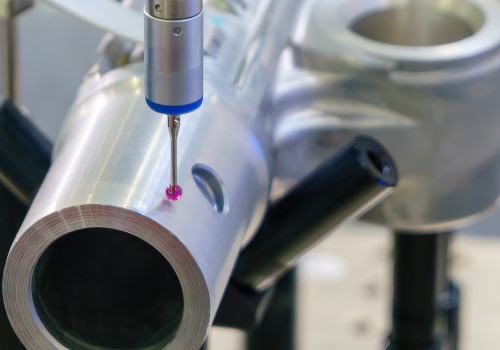 CMM measuring reverse engineered part
Converting Measurements into CAD
Once dimensional data is complete, B&H Machining converts the measurements into a detailed CAD file or model. This step transforms the collected information into a digital representation that captures all critical features, dimensions, and relationships. Skilled engineers review the data to ensure accuracy and confirm that the model reflects the original component’s form and function. The CAD model serves as the foundation for manufacturing, allowing the team to evaluate manufacturability, make improvements, and generate precise toolpaths. It also provides a digital record that can be used for future production or updates. By creating a high-quality CAD model from accurate dimensional data, B&H ensures the reproduced part can be produced consistently and reliably. This process supports efficient reverse engineering, helping teams restore functionality and reduce downtime when original documentation is unavailable.
Need a replacement part without original documentation? Contact us to learn how our reverse engineering services can help.
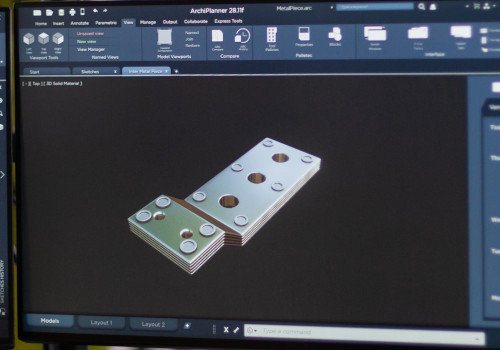 CAD Model
Fabrication of the Final Component
Once the design is finalized, B&H Machining uses both CNC machining and 3D printing to produce the reverse-engineered component. CNC milling, CNC turning, and multi-axis machining recreate complex features and tight tolerances with high precision, ensuring the part matches the original design and performs reliably. At the same time, 3D printing is used when rapid iteration or quick validation is needed, supporting faster review cycles and reducing lead times. This combined approach allows the team to select the best manufacturing method based on part requirements, quantity, and material. Using production-capable machining processes ensures the component can be reproduced reliably whether a single replacement is needed or multiple units are required over time. Together, these capabilities support efficient, accurate reverse engineering from concept to finished part.
Need to recreate a part fast? Contact our team or submit an RFQ to get started.
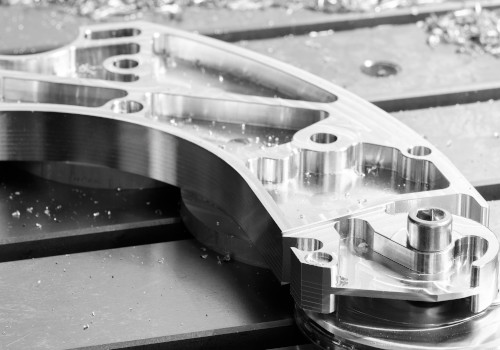 Reverse Engineered CNC Milled Part






B & H Machining is Minnesota’s premier CNC machining partner, delivering expert CNC milling, turning, and comprehensive manufacturing solutions.